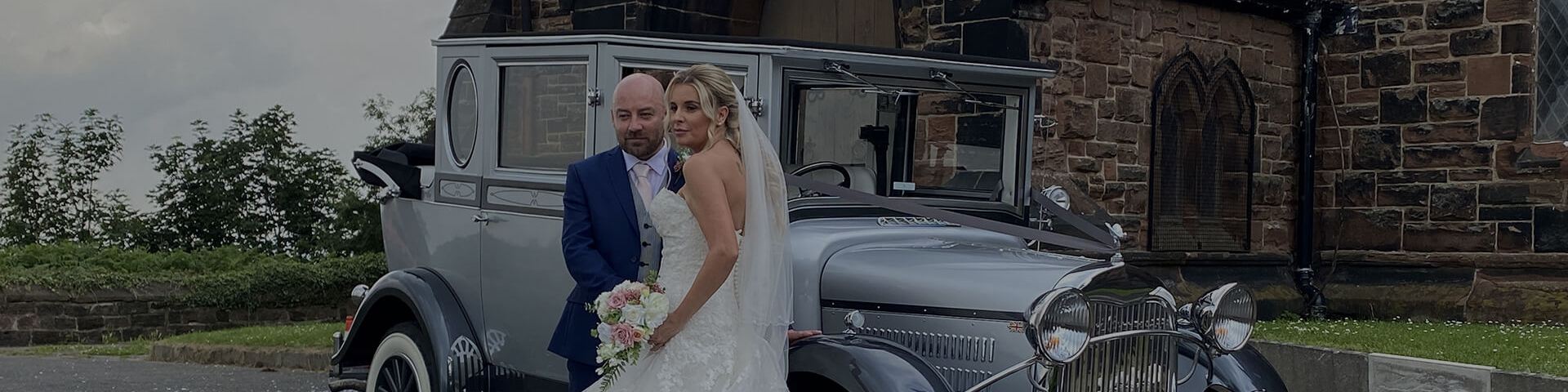
Vintage vs Modern Wedding Cars – Which Is Best for Your Wedding?
Caroline Lamont - 28th August 2026
Vintage wedding cars create a distinctive, traditional arrival; modern luxury cars prioritise contemporary comfort, refinement and a cleaner look. Neither is automatically better. The right choice depends on your wedding style, dress, passenger numbers, journey length, venue access and the photographs you want.
Direct Answer: Vintage or Modern Wedding Car?
Choose a vintage wedding car when you want the vehicle to be a visible part of the wedding aesthetic, a strong photographic feature and a traditional arrival. Choose a modern wedding car when you prefer contemporary luxury, familiar comfort, a discreet premium look or a practical larger vehicle for several passengers.
If both styles appeal, compare the exact cars rather than the labels. Door width, rear space, passenger capacity, roof arrangement, ride comfort, climate control, journey length and venue access can matter more than whether a car is described as vintage or modern.
The Best Wedding Car Is the One That Fits the Day You Are Actually Planning
A wedding car has several jobs at once: it must transport people reliably, feel comfortable in formal clothing, arrive appropriately at the venue and often appear in photographs that will be kept for decades. That makes the decision more personal than simply choosing “old” or “new.”
Start by comparing the exact Lamont wedding cars. Lamont's fleet includes period-style Regent and Imperial models alongside modern Mercedes and Tesla options, so the comparison can be made around real vehicle characteristics rather than generic categories.
Vintage vs Modern Wedding Cars at a Glance
| Decision point | Vintage wedding car | Modern wedding car |
|---|
| Visual impact | Distinctive, decorative and strongly associated with formal wedding imagery. | Clean, premium and contemporary; can be understated or dramatic depending on model. |
| Photography | Often becomes a major prop and backdrop in portraits. | Works well for modern editorial, luxury or minimalist photography. |
| Passenger space | Varies widely; some period-style wedding cars have generous rear cabins and higher capacity. | Luxury saloons suit couples; modern people carriers can move larger groups efficiently. |
| Ease of entry | Some models offer wide-opening doors and large rear areas, useful for full dresses. | Familiar step-in height and modern door operation; exact model still matters. |
| Long journeys | Best assessed on the exact car, route and passenger comfort. | Modern suspension, climate systems and cabin refinement can suit longer motorway journeys. |
| Wedding style | Traditional, romantic, heritage, country-house, manor, barn or classic city weddings. | Contemporary hotels, city venues, minimalist styling, luxury events and modern architecture. |
| Weather flexibility | Landaulette or convertible roof options can create memorable photos when conditions allow. | Fully enclosed climate-controlled cabins offer predictable comfort in poor weather. |
What Counts as a Vintage Wedding Car?
In wedding transport, “vintage” can describe genuine historic vehicles, carefully preserved classics or modern-built period-style cars inspired by early twentieth-century designs. The practical experience varies significantly, so always ask about the exact model rather than assuming every vintage-looking car behaves the same way.
Lamont's vintage collection includes a Regent Landaulette, Regent Convertible and Imperial Landaulette. The website describes generous rear space, wide door openings and roof options on the convertible and landaulette styles, all of which are relevant to wedding-day use.
What Counts as a Modern Wedding Car?
Modern wedding cars usually include premium saloons, executive vehicles, electric cars and luxury people carriers. Their appeal often lies in refinement rather than ornament: smooth travel, high-spec interiors, contemporary styling and practical passenger comfort.
Lamont lists a Mercedes S Class, Mercedes V Class and Tesla Model S among its modern choices. The V Class is particularly useful when passenger capacity matters, while the S Class and Tesla offer a more conventional luxury-car experience for the couple or smaller groups.
Vintage Wedding Cars: Why Couples Choose Them
CharacterA memorable arrival
A period-style silhouette feels immediately ceremonial. The car announces the arrival rather than functioning as anonymous transport.
PhotographyA built-in backdrop
Large wings, contrasting paint, chrome details and roof lines can add visual structure to couple portraits and venue photographs.
SpaceRoom for formal clothing
Some vintage wedding cars have generous rear compartments and wide doors that make entry easier in a full gown.
TraditionWorks with classic venues
Churches, manor houses, country estates and historic city buildings often pair naturally with period-style transport.
OccasionFeels different from everyday travel
Couples often choose a vintage car precisely because it is unlike the vehicles they normally use.
RoofOpen-air photo opportunities
Convertible or landaulette sections can create striking arrivals and portraits when weather and venue conditions are suitable.
Modern Wedding Cars: Why Couples Choose Them
ComfortRefined cabin experience
Modern luxury cars are designed for smooth travel, supportive seating, quiet cabins and familiar controls.
ClimateHeating and cooling
Strong climate control can be valuable on very hot days, winter mornings or longer journeys in formal clothing.
StyleContemporary aesthetic
Modern cars suit clean architecture, city hotels, monochrome styling and couples who prefer understated luxury.
CapacityPeople-carrier practicality
A luxury V Class can transport a larger bridal or groom's party without losing the premium feel of dedicated wedding transport.
JourneyLong-distance confidence
Modern suspension and cabin refinement can be appealing when the venue is a substantial drive from the collection point.
ElectricA modern statement
An electric model such as the Tesla Model S can suit couples who want contemporary technology to be part of the day.
Which Looks Better in Wedding Photos?
There is no universal winner. Vintage cars are naturally decorative and often become a focal point. Their long body lines, contrasting colours and traditional details give photographers several strong compositions. Modern cars can produce equally effective images when the wedding has a clean, editorial or luxury aesthetic.
Think about the background. A period-style car outside a stone church, manor or country venue can feel cohesive. A Mercedes or Tesla outside a contemporary hotel, city building or minimalist venue can feel equally intentional.
Judge the Car Against the Venue, Not in Isolation
A car can look beautiful in a showroom photograph and still feel visually disconnected from your venue. Put a photograph of the car beside a photograph of the ceremony entrance. The combination often makes the right direction obvious.
Which Is Better for a Large Wedding Dress?
Choose by access and rear space rather than age. Lamont's vintage wedding cars are described as having wide-opening doors and generous room at the rear, which can make them very practical for a voluminous dress. Some modern cars also offer excellent rear space, but a low roofline or smaller door aperture can be less convenient.
If you have a ballgown, long train, structured skirt or several layers, view the car where possible. Sit in the rear seat and imagine the dress volume, bouquet and person travelling with you. Practical comfort is more important than a specification sheet.
Which Is Better for Bridesmaids?
Capacity is usually the deciding factor. A larger vintage model can allow several bridesmaids to travel together, while a modern Mercedes V Class offers a practical contemporary alternative. If the group is large, compare one high-capacity car with two smaller cars rather than assuming bridesmaids require a separate category of vehicle.
Which Is Better for the Groom and Groomsmen?
Modern cars are often chosen for the groom's party because executive saloons and people carriers feel natural for a group arrival, but there is no reason a vintage car cannot be used. The question is whether you want matching transport, contrasting styles or simply the most efficient capacity for each group.
Which Is Better for Older Passengers?
Access varies by vehicle. Older passengers may value a wide door, supportive seat, comfortable step-in height and space to turn when entering or leaving. Do not assume a modern car is automatically easier or a vintage car automatically harder. Inspect the exact vehicle and explain any mobility concerns to the supplier.
Vintage vs Modern for Long Wedding Journeys
For a short local transfer, aesthetics may dominate the decision. For a journey of an hour or more, cabin comfort becomes more important. Modern luxury cars typically provide familiar heating, air conditioning, suspension and sound insulation that can make longer travel relaxing.
A vintage or period-style car can still be entirely suitable for a longer journey if the supplier confirms the route is appropriate. Ask about travel time, road type and passenger comfort rather than making assumptions from the vehicle's appearance.
City-Centre Weddings
Urban venues introduce traffic, loading restrictions, narrow arrival points and photographers working in tighter spaces. Modern cars can blend naturally with city architecture, while a vintage car can create a dramatic contrast that stands out against the setting.
Check the turning area and stopping space at the entrance. A long vehicle may need more manoeuvring room, regardless of whether it is vintage or modern.
Country Houses, Barns and Rural Venues
Vintage cars often look at home against country-house facades, mature gardens and traditional barns. Modern luxury cars can work beautifully too, especially where the wedding styling is contemporary rather than rustic.
For rural access, ask about narrow lanes, steep drives, gravel surfaces and turning areas. A vehicle that suits the aesthetic still has to reach the venue comfortably.
Church Weddings
A vintage wedding car creates a traditional church arrival and can remain for photographs before the couple travels to a reception venue. A modern car offers a cleaner look and may be especially appealing if the onward journey is longer.
Because church weddings often involve two significant journey legs, consider comfort and waiting time as well as the arrival image.
Hotel and Contemporary Venue Weddings
Modern luxury cars are an obvious match for glass-fronted hotels, modern country resorts and urban venues. Their understated finish can complement a black-tie or minimalist wedding without competing with the styling.
Vintage cars can be used deliberately as contrast. If the couple wants the transport to be the main romantic element against a contemporary building, the difference can be visually powerful.
What About Colour?
Colour often matters more than couples expect because the car appears beside dresses, suits, bouquets and the venue. Lamont's vintage cars are described in two-tone silver or bronze and ivory finishes, while the modern Mercedes vehicles are silver. Neutral car colours are generally easy to coordinate because they do not compete strongly with floral or clothing palettes.
Ribbon colour can provide the more specific connection to your wedding scheme without requiring the whole vehicle to match.
Vintage vs Modern in Rain
Both can work perfectly well in wet weather when professionally prepared. The main difference is how you planned to use the car. If your vision depends on an open roof, exterior portraits or long periods posing beside the vehicle, rain changes the photography plan. An enclosed modern car may be less affected because its appeal is concentrated inside the cabin and in arrival shots.
Convertible and landaulette roof sections should be treated as a weather-dependent bonus, not something the entire wedding schedule relies on.
Vintage vs Modern in Hot Weather
On a very warm day, air conditioning and modern climate control can be a significant comfort advantage, particularly on longer journeys or with heavy formal clothing. If you prefer a vintage car, ask how the cabin is ventilated and how the supplier handles hot-weather travel.
For shorter local journeys, the difference may be less important than the shade available at the pickup point and how long passengers will be sitting in the car before departure.
Which Is Better for Winter Weddings?
Modern heating and fully enclosed cabins are reassuring in cold weather. Vintage cars can also create exceptional winter images, especially against historic buildings, frosted landscapes or seasonal decorations. Choose the car you love, then ask the provider how it is prepared for winter travel.
Vintage vs Modern: Passenger Capacity
| Need | Vintage option | Modern option |
|---|
| Couple or two main passengers | Most vintage bridal cars can suit this comfortably. | Luxury saloon such as an S Class or Tesla can be ideal. |
| Several bridesmaids | Higher-capacity Regent or Imperial style can keep the group together. | A V Class can move a larger group in a contemporary cabin. |
| Full dress and parent | Wide doors and generous rear space can be a strong advantage. | Check rear-door opening, roofline and cabin width on the exact car. |
| Groom's party | Distinctive if the group wants a traditional entrance. | People carrier or executive vehicle is often highly practical. |
| Two-car combination | Matching period-style cars can produce a unified visual arrival. | Modern saloon plus people carrier can combine premium style with capacity. |
Can You Mix Vintage and Modern Wedding Cars?
Yes, and it can be one of the most practical solutions. The main bridal or couple car can be vintage for visual impact, while a modern people carrier transports bridesmaids or family. Alternatively, a modern premium saloon can carry the couple while a higher-capacity vintage car carries attendants.
The key is to make the mixture feel deliberate. Similar neutral colours, matching ribbon details or a clear arrival order can connect different vehicle types.
Do Both Cars Need to Be in the Photos?
No. If you hire more than one vehicle for logistics, decide which is the primary photography car. The other vehicle can complete its passenger work without waiting unnecessarily. This is particularly useful when mixing a statement vintage car with a practical modern support vehicle.
Which Style Feels More Luxurious?
Luxury means different things. Vintage luxury is about occasion, rarity, craftsmanship and the sense of stepping into a ceremonial vehicle. Modern luxury is about quietness, materials, smoothness, climate control and technology. Decide which experience matters more to you.
Choose vintage luxury if you value…
- Traditional visual drama.
- Historic or period styling.
- Distinctive exterior details.
- A vehicle that becomes part of the wedding theme.
- Classic photographic character.
Choose modern luxury if you value…
- Contemporary interiors.
- Climate control and refinement.
- A discreet premium arrival.
- Technology and modern comfort.
- A vehicle style familiar from luxury travel.
Which Style Is More Comfortable?
Modern cars often win on conventional ride refinement, but comfort is not just suspension. Space to sit without crushing a dress, ease of entry, visibility, seat height and passenger capacity all matter. A spacious period-style wedding car can be more comfortable for a bride in a large gown than a lower modern saloon.
View the car and think about the actual journey. A 10-minute local trip and a 70-minute cross-county drive create different priorities.
Does Vintage or Modern Cost More?
There is no reliable rule that one category is always more expensive. Pricing depends on the exact vehicle, date, distance, number of journeys, waiting time, chauffeur cover and how many cars are required. A rare vintage model can cost more than a standard modern car; a premium modern vehicle can cost more than a period-style car.
Compare complete quotes for the same itinerary. Do not compare one advertised vehicle rate with another supplier's full wedding-day package.
Which Style Is Easier for Multiple Pickups?
The route matters more than style. A larger-capacity vehicle can reduce repeated trips, while two cars can solve simultaneous pickups. If several people need transport, start with passenger logistics and only then choose the vintage or modern option that fits.
Which Style Is Best for a Small Wedding?
A small wedding gives you maximum freedom. With only the couple or a couple plus one parent needing transport, capacity is unlikely to constrain the choice. You can prioritise aesthetics and experience: vintage for character or modern for refinement.
Which Style Is Best for a Large Bridal Party?
Look at higher-capacity models first. Lamont's six- and seven-seat vintage options and seven-seat Mercedes V Class provide two very different visual solutions to the same practical problem. If the group still exceeds capacity or starts from multiple locations, a second car may be required.
What Should You Wear-Test With the Car?
You do not need to bring the actual wedding dress to a viewing, but think through the clothing. Consider skirt width, train length, veil, bouquet, suit jackets, hats and whether anyone has restricted mobility. Ask where the bouquet can sit and how passengers enter without stepping on fabric.
- Check rear-door opening width.
- Check step-in height.
- Look at headroom.
- Check rear legroom.
- Ask how many adults sit comfortably together.
- Consider dress volume rather than just passenger count.
- Check where bouquets and small bags can be placed.
- Ask how the roof system works if choosing a convertible or landaulette.
A Photography Checklist for Choosing the Car
- Does the car suit the venue architecture?
- Will the colour work with clothing and flowers?
- Do you want the entire vehicle in portraits or just arrival images?
- Is there enough room at the venue to position the car?
- Would an open roof create useful photographs?
- Can the car remain after the ceremony for portraits?
- Does the photographer know how long the car is available?
- Which car should remain if you hire more than one?
A Comfort Checklist for Choosing the Car
- How long is the journey?
- How many passengers travel in each leg?
- Is the dress particularly full?
- Does anyone need easier access?
- Will the weather make heating or cooling important?
- Are there children travelling?
- Is there enough room for bouquets and clothing?
- Will passengers be sitting in the car while waiting?
A Venue Checklist for Choosing the Car
- Is the driveway narrow?
- Is the entrance steep?
- Is there gravel or uneven ground?
- Is the turning area limited?
- Are there city-centre loading restrictions?
- Can the car stop close to the ceremony entrance?
- Is there shelter for getting in and out in rain?
- Does the venue have rules about vehicle access for photographs?
What If You Love the Look of Vintage but Prefer Modern Comfort?
Keep the actual journey in perspective. If the drive is short and the vintage car has generous space, you may find the experience completely comfortable. If the journey is long, you could use a vintage car for the ceremonial leg and a modern car for another part of the day, depending on the transport plan.
Mixing styles is not a compromise if each car is chosen for the job it does best.
What If You Love Modern Cars but Have a Traditional Venue?
There is no requirement to match the venue period. A modern Mercedes outside a historic building can create a clean, formal contrast. What matters is whether the combination reflects the wedding style you actually want.
Why Viewing the Cars Can Settle the Decision
Photographs are useful, but they flatten size and space. Standing beside a vintage car shows how dramatic it feels; sitting in a modern saloon shows the cabin refinement; opening the doors reveals whether a full dress will be easy to manage.
Lamont encourages couples to view its cars before booking where possible. You can read more about the family's experience through Lamont Wedding Cars.
What Makes Lamont's Choice Useful?
Lamont offers both categories rather than forcing couples into one style. The vintage range includes Regent and Imperial period-style vehicles, while the modern fleet includes Mercedes and Tesla models. That makes it possible to compare visual character, capacity and comfort within one wedding-car service.
The website also states that Lamont books one wedding a day, has more than 25 years' experience and has completed over 1,000 weddings. Those service details matter whichever style you choose because reliability is more important than whether the bonnet is classic or contemporary.
Questions to Ask Before Choosing Vintage or Modern
| Question | Why it matters |
|---|
| How many passengers travel in this car? | Capacity can eliminate otherwise attractive options. |
| How long is the journey? | Longer routes place more weight on cabin comfort and climate control. |
| How large is the dress? | Door opening and rear space may become decisive. |
| What is the venue access like? | Turning area, steep drives and city restrictions affect suitability. |
| How important are photos with the car? | A highly decorative vehicle has more value if it will feature strongly in portraits. |
| Do we need an open roof? | Weather-dependent roof options may steer you toward a convertible or landaulette. |
| Do we need another car for attendants? | The best plan may mix vintage and modern vehicles rather than choosing one style for all. |
How to Make the Final Choice in Five Steps
- List the practical requirements. Passenger numbers, dress space, route length and venue access come first.
- Shortlist exact vehicles. Do not decide from “vintage” or “modern” as abstract labels.
- Compare the visual fit. Place car images beside your venue, clothing and wedding style.
- View the cars if possible. Check access, space, seating and how they feel in person.
- Choose the experience you value most. Traditional character and photography, or contemporary refinement and comfort—or a deliberate combination of both.
How to Discuss Your Choice With Lamont
If you are torn between two vehicles, describe the wedding rather than simply asking which is “best.” Tell Caroline the date, route, passenger numbers, venue style, dress considerations and how important photographs with the car are. Contact Lamont Wedding Cars with those details and ask which cars fit the plan.
For the wider service and local coverage, the Lamont Wedding Cars Liverpool homepage provides the main overview.
Final Verdict: Vintage or Modern Wedding Car?
Vintage is usually best when the car itself is part of the romance, styling and photography. Modern is usually best when contemporary luxury, familiar comfort, climate control or practical passenger movement matters most. But the strongest decision comes from the exact vehicle. A spacious vintage car can be more practical than a small modern saloon; a modern people carrier can be more useful for bridesmaids than two decorative cars.
Choose with your eyes and your itinerary. If both categories have a role, use both. For more practical wedding transport advice, visit the Lamont Wedding Cars blog.
The best wedding car is not the oldest or the newest—it is the one that looks right, feels right and solves the journey properly.